
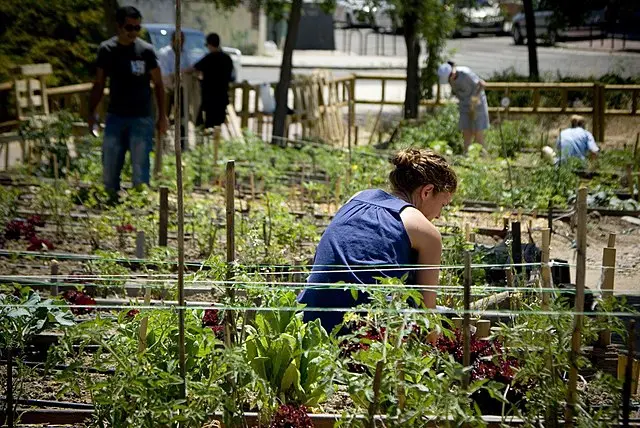
Urban gardens or huertos urbanos have become very popular in Spain’s big cities, so popular in fact that in some of the bigger cities there are now long waiting lists if you want to be able to have your own little vegetable plot.
According to Focus on Spanish Society, a publication edited by Funcas, almost two-thirds of the total population (65 percent) of those in Spain live in apartments, the second-highest number in the EU, after Latvia.
This means that over half of Spaniards don’t have their own gardens, fuelling the need for green spaces in cities where people can fulfill their green-fingered ambitions, spend more time outside or simply learn more about the cultivation of vegetables.
Urban gardens were created to meet this demand and have been around in Spain since just after the Second World War. Today, the report on Urban Agriculture in Spain, says that there are over 20,000 allotments around the country.
All of these work slightly differently – some are owned by the city council, others by cultural or social associations and some are private. There are different ways to get involved, from signing up to waitlists provided by your local Ayuntamiento (Town Hall) to paying a monthly fee to rent your own plot or joining a communal garden to work with others, instead of having your own individual space.
Here’s how it works in some of Spain’s main cities, what you need to do and how to get involved.
Barcelona
Barcelona has an extensive network of urban gardens in almost all barrios across the city, even in the very central ones such as Ciutat Vella and Raval.
Barcelona’s Urban Gardens Network is aimed at people over 65 in the city. They must be physically capable of agricultural work and at the time of requesting a plot and must not live with anyone else who has been given one. Part of the program is also reserved for people at risk of social exclusion.
To be able to get your own little garden in Barcelona you must ask at the offices of Atención Ciudadana de los Distritos and bring the original and a copy of your DNI/TIE, as well as a certificate of convivencia, which can also be applied for at the same office.
If you're not over 65 there are still some communal gardens that will let you join. In this case, you won't be given your own plot, but will work together with others on the same patch. There's a list of all the gardens in Barcelona here, which you can consult. You may have to contact them individually to see which accept volunteers.
Madrid
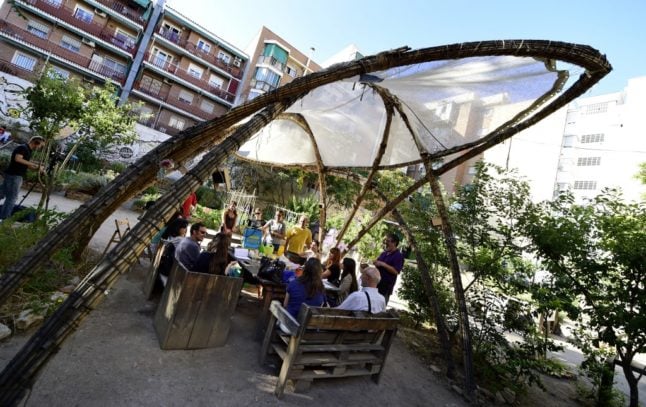
There are over 400 urban gardens distributed throughout the Spanish capital. There are allotments managed directly by residents and associations, as well as municipal plots allocated to senior citizens or social organisations working with vulnerable groups, and those located in schools.
Some receive training and advice from the City Council and are part of the Network of Ecological School Gardens of Madrid so that kids can learn about gardening and planting vegetables too.
The Network of Urban Gardens of Madrid is an initiative promoted by citizens who are dedicated to community agriculture within the city. On their website, you’ll find a list of each urban garden, as well as details on how to contact, join or rent a plot at each one.
Málaga
There are several urban gardens located both within Málaga city itself and on its outskirts. Some are part of the Málaga Urban Gardens Network. Rather than having one body that manages them all however, most are managed individually, so if you want to get involved, you’ll have to contact each one. Some of the best located closest to the city centre are La Yuca, El Caminito and Huerta Dignidad.
El Caminito is one of the most well-known and is located next to the old San Miguel cemetery. It's managed by the El Caminito association and the main purpose of the project is to raise awareness of environmental issues. On their website, they state that all you need to do to join in is to show up and be willing to participate. You can also e-mail huertaelcaminito@gmail.com to find out more. There's also Jardines Dignidad, which you can e-mail at huertadignidad@gmail.com.
This blog post from the Málaga Permaculture Network has a list and contact details of some of the best.
Valencia
There are several urban gardens in Valencia city. The four main ones are Huertos de Benimaclet, Hort de la Botja and El Espacio Verde Benicalap.
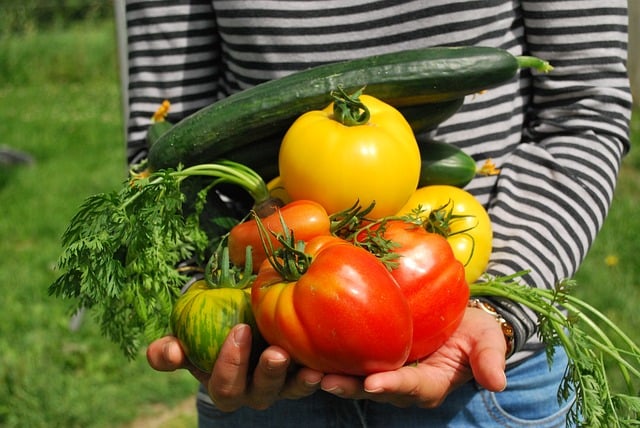
Huertos de Benimaclet is a dedicated space of over 60 plots for residents of the neighbourhood to grow fruits and vegetables and learn about cultivation and the environment. Previously there was a small fee to join and waitlists are common, so contact them via their site to find out the current cost and availability.
Hort de la Botja-Velluters grew out of the need for education and including those who were at risk from social exclusion. They have an active Facebook group, through which you can contact them and ask about getting involved. They also organise lots of activities such as those for local children.
El Espai Verd Benicalap is an urban garden and civic centre which was created between 2020 and 2021. It has just 15 organic vegetable plots, as well as an edible forest. The garden is reserved for those who live in the area of Benicalap and join one of the Benicalap barrio associations.
The largest area of urban gardens Sociópolis in La Torre was damaged during the devastating floods and was scheduled to re-open either at the end of May or this month, so keep an eye on the news find out more.
Seville
Seville several urban gardens within its city limits, located in several of the main neighbourhoods. There’s a website dedicated to Huertos Urbanos in Sevilla, which lists events, tours and open days when you can go and help out. You can contact them directly about the availability of renting your own patch or how you can get involved on an ongoing basis.
There are also several vegetable plots owned by the Ayuntamiento of Seville in the Parque Guadaíra. Each one was given to a different association to manage, so you may find that by joining a local association, you'll have access to an allotment too.
What if I can't join an urban garden?
If you’re unable to join an urban garden because the waitlists are too long, you can’t afford to rent a plot yourself or you are in the right age bracket, then remember it’s always possible to create your own mini vegetable patch on your balcony.
No matter how small your balcony is, there’s always room for planters that hang off the edge, where you can grow smaller edible plants such as cherry tomatoes, herbs and banana peppers for example. You can also place pots around the edge to grow various vegetables instead of flowers or traditional house plants.
Comments